
The year 1993 brought with it a renewed focus on the unresolved questions surrounding the assassination of President John F. Kennedy, particularly as new documents began to surface. Against this backdrop, the work of the House Select Committee on Assassinations (HSCA), which had conducted its probe in the late 1970s, continued to be a point of reference for historians and the public alike. One figure that the HSCA had scrutinized, and about whom questions lingered, was Paulino Sierra Martinez.
The HSCA, in its broader investigation into the Kennedy assassination, reached a pivotal conclusion: that Kennedy was the victim of a conspiracy. However, the committee ultimately found itself unable to definitively identify the perpetrators or the source of their funding. It was within this complex and often murky investigative landscape that Paulino Sierra Martinez emerged as a person of interest.
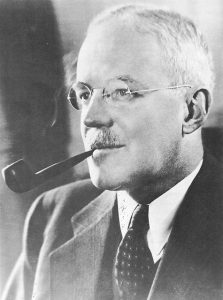
Sierra was known as an anti-Castro militant, and suspicions about his activities and connections ran deep. His son, Paul Sierra, even held the personal conviction that his father was involved with U.S. intelligence due to his fervent patriotism and strong anti-Communist sentiments. The Secret Service itself harbored suspicions about Sierra. Compounding these concerns were Sierra’s “unsavory connections”, including links to three “sketchy characters” who were seen with Lee Harvey Oswald at the Dallas home of Silvia Odio, the daughter of a prominent anti-Castro activist, in September 1963. Furthermore, it was noted that Sierra had connections to organized crime. Allen Dulles, a significant figure on the Warren Commission, had even met with someone whom the Secret Service regarded as suspicious, and Sierra himself arranged to meet with Dulles.
The HSCA was “intrigued by Sierra’s unsavory connections”. Yet, despite their interest, the committee faced significant limitations. They acknowledged that they lacked the necessary “time and resources to fully pursue its leads” concerning Sierra. Consequently, their final determination regarding Sierra’s activities was that their “relevance to the assassination remained undetermined”. This inconclusive finding underscored the challenges inherent in unraveling the full scope of such complex networks.
The HSCA’s investigation into figures like Sierra stood in stark contrast to the approach taken by the Warren Commission in 1964. The Warren Commission, the first official inquiry into President Kennedy’s assassination, made “no serious effort to examine anti-Castro militants like Sierra and their connections to the CIA and organized crime”. Indeed, Sierra’s name is conspicuously absent from the Warren Report’s twenty-six volumes. This omission is particularly striking given that Allen Dulles, who served on the Warren Commission, could have, but did not, disclose what he knew about Sierra or his meeting with an individual whom the Secret Service deemed suspicious.
The HSCA’s existence and its renewed efforts were themselves a product of a changing political climate. Revelations in 1975 from the Senate’s Select Committee to Study Governmental Operations with Respect to Intelligence Activities, often referred to as the Church Committee, exposed repeated attempts by the CIA to assassinate Cuba’s Fidel Castro. This discovery raised profound questions about what information the CIA might have withheld from the Warren Commission regarding Lee Harvey Oswald and the Kennedy assassination. The post-Watergate era further contributed to this atmosphere of skepticism and a demand for transparency, reminding the public of the potential for duplicity among government leaders and creating “the right atmosphere for a renewed look at the assassination”.
The broader context of 1993 further highlighted the ongoing nature of these historical inquiries. In that year, documents unearthed at the National Archives suggested that Oswald had probably been debriefed by the CIA in 1962, a fact the CIA had officially denied for years. By January 1994, over 500,000 pages of documents related to the assassination had been released following legislation prompted by Oliver Stone’s 1991 film JFK, although this influx of new material did not contradict the conclusions that Oswald and Ruby acted alone. Despite these continuing disclosures and re-evaluations, the HSCA’s work on figures like Paulino Sierra Martinez remained a testament to the persistent, albeit often frustrating, quest for comprehensive truth in the aftermath of the Kennedy assassination.